
LoRa: Long-Range Communications Beyond Cellular Coverage in NZ
New Zealand’s farms, remote infrastructure and emergency-management networks often extend well beyond reliable Wi-Fi or cellular coverage. LoRa, short for Long Range, provides a practical way to transmit small amounts of data over long distances using very little power.
Introducing LoRa
LoRa is a low-power radio technology designed for short messages and sensor readings rather than high-speed data.
Several technologies are built around LoRa:
- LoRaWAN connects large numbers of IoT sensors through internet-connected gateways.
- Point-to-point LoRa provides a direct link between two devices.
- Mesh networks pass messages through repeaters to extend coverage.
- Meshtastic and MeshCore provide off-grid messaging and telemetry.
- Reticulum provides a broader networking layer that can operate across LoRa and other communication methods.
LoRa is particularly useful where devices must operate from batteries or solar power and only need to send occasional readings, alerts or text messages.
Real-world case study: Tairāwhiti emergency communications
During Cyclone Gabrielle, cellular networks, data services, Wi-Fi and phone coverage failed across parts of Tairāwhiti.
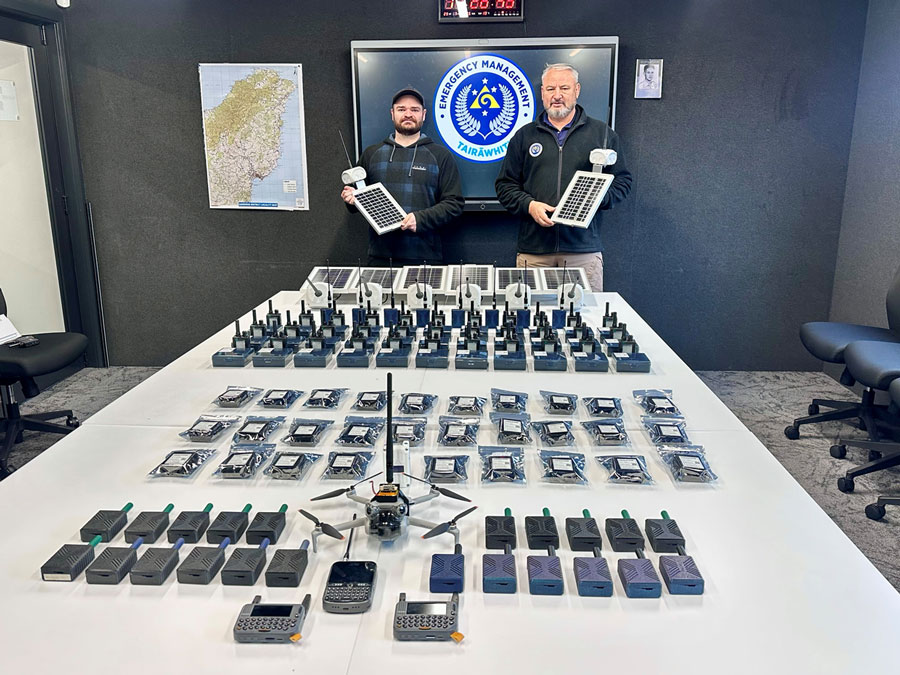
Tairāwhiti Emergency Management initially used Meshtastic as a proof of concept. Testing exposed limitations, leading local developer Liam Cottle to develop MeshCore as a more structured regional communications system.
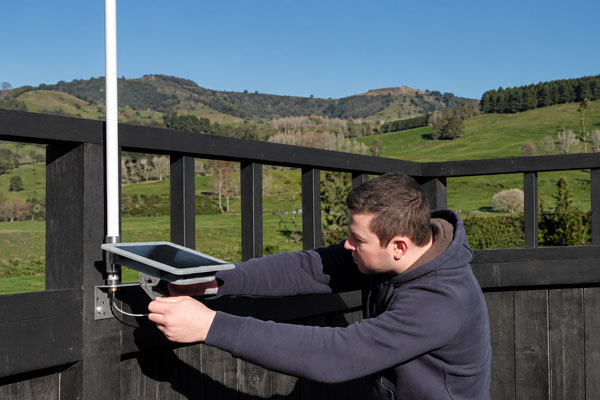
The network uses secure, low-bandwidth text messaging and solar-powered repeaters to create an off-grid communications backbone. It connects remote users with the Emergency Coordination Centre without relying on cell towers or a central internet connection.
MeshCore is now one of several backup communications methods used in the region.
Meshtastic, MeshCore and Reticulum
Meshtastic is an accessible open-source system for text messaging, GPS positions and basic telemetry. Devices connect to phones by Bluetooth and can relay messages through other nodes.
MeshCore uses dedicated repeaters and store-and-forward functions to create a more deliberate communications network. Fixed repeaters installed on hills, towers or buildings can form a persistent regional backbone.
Reticulum takes a broader approach. It is designed to carry data across different physical links, potentially including LoRa, packet radio, Wi-Fi and wired networks. This makes it interesting for experimental or resilient communications systems that may need more than one transport method.
Perfect for New Zealand
LoRa is well suited to New Zealand’s geography, where farms, valleys and isolated infrastructure can make conventional connectivity expensive or unreliable.
Potential applications include:
- Water-tank and trough-level monitoring
- Soil-moisture and irrigation sensors
- Rainfall and remote weather stations
- River and flood-level alerts
- Pump and electric-fence monitoring
- Gate, shed and equipment-status sensors
- Cool-store and refrigeration alarms
- Livestock or machinery tracking
- Solar and battery-system monitoring
- Communications between isolated farms or communities
- Backup messaging for emergency response teams
LoRa will not replace cellular, satellite or conventional radio systems. Its value lies in providing a low-cost, low-power additional layer for sensors, simple messaging and remote monitoring, especially when normal infrastructure is unavailable.
Links: